The short answer
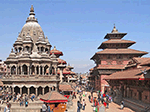
Four places carry the city: Swayambhunath, Boudhanath, Pashupatinath and Durbar Square. All four are World Heritage sites, and together they show how Hindu and Buddhist life overlap in one valley.
Key facts
- Swayambhunath
- Hilltop stupa with valley views; about 1 to 2 hours
- Boudhanath
- Vast white stupa, Tibetan Buddhist heart; best at dawn or dusk
- Pashupatinath
- Shiva temple on the Bagmati; the main shrine is closed to non-Hindus
- Durbar Square
- Old royal square; parts still under repair after 2015
How it works
- Start with BoudhanathGo at dawn or dusk. The kora circuit around the stupa is the best free experience in the city.
- Add PashupatinathCross the Bagmati by the east-bank steps for a view of the temple and the evening aarti. Non-Hindus cannot enter the sanctum.
- Finish with Swayambhunath and Durbar SquareSwayambhunath at sunset, then Durbar Square the next morning, when light and crowds are kinder.
How to choose between the big four
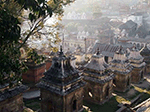
Swayambhunath is the easiest introduction: a hilltop stupa with prayer flags, monkeys and a wide view of the valley, and it is rewarding even if you only have an hour. Boudhanath is the spiritual centre for Tibetan Buddhism in the valley, and the experience is the circling of the stupa with others, so go when people are walking rather than at midday. Pashupatinath is the most important Hindu temple in Nepal; non-Hindus cannot enter the main shrine but can walk the riverside and watch rituals from the opposite bank. Durbar Square gives you old palace architecture and a sense of the city's past.
If you can only do two, choose one Hindu and one Buddhist site, for example Pashupatinath and Boudhanath, so you see both sides of the valley's religious life.
Etiquette that makes the visit better
Dress modestly with covered shoulders and knees, remove shoes where asked, and walk clockwise around stupas and prayer wheels. Leather items and photography are restricted at some inner shrines, so look for signs. Some of the best moments come from staying a little longer than the rush allows: sitting on a step at Swayambhunath, or watching the evening aarti ritual at the river.
Official guides are licensed and can add history and meaning. Agree the rate and the length of the tour at the start, and ask whether entry fees are included. See also temple etiquette.
Insider tip
If you can only fit two, pick Boudhanath for atmosphere and Pashupatinath for intensity. They are close together, so they cost you one morning.
Avoid this
Do not enter temples in shorts or with bare shoulders, and do not photograph cremations at Pashupatinath. See temple etiquette.
Related questions
Which site is the most crowded?
Durbar Square at midday and Pashupatinath on festival days.
Do I need a guide?
For Durbar Square and Pashupatinath, a guide explains the layers of history and ritual you would otherwise miss.
Plan your Nepal trip in 60 seconds
Answer four short questions. We show trips that fit, and a planner can send a route and price. Free, no payment.
Trips that match this guide
Keep reading
More guides to explore
- Patan and BhaktapurTime needed, which to pick, and how to reach them.
- Dhulikhel, Namobuddha and PanautiDhulikhel sunrise, Namobuddha, Panauti and how to link them.
- Kathmandu Valley Temples and MonasteriesPashupatinath, Patan, Changu, Kopan and the rest, ranked.
- Daman and the Rajpath HillsDaman view tower, the old Rajpath, Chitlang and Hetauda.
- All Nepal guidesBrowse every place and theme.