
Wildlife of Nepal: the short answer. For the best chance of big wildlife, spend two or three nights in the Terai jungles of Chitwan or Bardia between October and April. For Himalayan animals such as red pandas, blue sheep and snow leopards, go on a trek in the Annapurna, Langtang, Manaslu or Everest regions in the dry seasons, and treat any sighting as a bonus rather than a promise.
Nepal packs an unusual range of habitats into a small country. Steamy lowland forests and grasslands sit only a few hours from glaciers and alpine slopes, so rhinos, tigers and crocodiles live in the same country as red pandas, blue sheep and snow leopards. This guide introduces the animals most travellers hope to see, where each is found, and how to plan wildlife time into a trip in 2027 or 2028.
Animals of the Himalaya
Above the forests, the cold and thin air suit a handful of hardy animals. They are hard to spot, so patient trekking with a local guide makes a real difference.

Red panda
Recognised by its white face markings and bushy tail, the red panda lives in the cool bamboo forests of the eastern and central hills. It spends most of its day in trees, eating bamboo shoots and leaves. It is listed as endangered, and sightings are rare. Habitat in places such as Langtang, Annapurna, Sagarmatha, Manaslu, Makalu Barun and Kanchenjunga is where researchers and guides look for it. Ilam in the far east is also known for it.

Musk deer
This small, shy deer has no antlers. Males instead have long curved canine teeth. It is mostly active at dusk and at night, so travellers seldom see it. Hunting for its scent gland has pushed the species towards endangered status. It lives in high forests in areas such as Mustang and Manang, so you may notice tracks more often than animals.

Snow leopard
The snow leopard is the legend of the high Himalaya. It lives on cold, rocky slopes at roughly 3,000 to 5,000 m and hunts blue sheep and ibex. Nepal’s population is thought to be a few hundred animals, spread across the northern mountains. Manang, Langtang, Manaslu, Mustang and Dolpo are among the regions linked to it. Most trekkers will never see one, but dedicated winter expeditions with specialist guides improve the odds.

Blue sheep (bharal)
Blue sheep are the animal you are most likely to see on a high trek. Despite the name they are closer to goats, with a slate-grey coat that blends into the rock. Herds graze on grass and herbs on steep slopes above the tree line, and flee uphill when threatened. They are the main prey of the snow leopard, so a big herd is a good sign for the whole food chain.
Animals of the Terai jungles
The Terai is the flat southern belt of Nepal, where rivers from the mountains spread into grassland and sal forest. This is where most travellers find their wildlife, in Chitwan, Bardia, Shuklaphanta and Koshi Tappu.

Ganges river dolphin
This nearly blind freshwater dolphin finds its way by sound. It is endangered, and dams and fishing nets have shrunk its range. In Nepal it is most often associated with the Karnali river near Bardia, with sightings usually made by boat or from the bank in the quieter dry months. Calm, early starts and a good local guide matter.

Gharial
The gharial is a fish-eating crocodilian with a long, thin snout. It is critically endangered. Conservation work, including a breeding centre in Chitwan National Park, has helped hatchlings return to the wild. Rivers in Chitwan and Bardia are the places to look, and a canoe trip is the classic way to see them basking.

Mugger crocodile
The mugger is a broad-snouted crocodile that lives in slow rivers, lakes and marshes of the Terai. It is classed as vulnerable. It is a good swimmer and an ambush hunter, so keep clear of the water’s edge and follow your guide’s instructions.

Greater one-horned rhinoceros
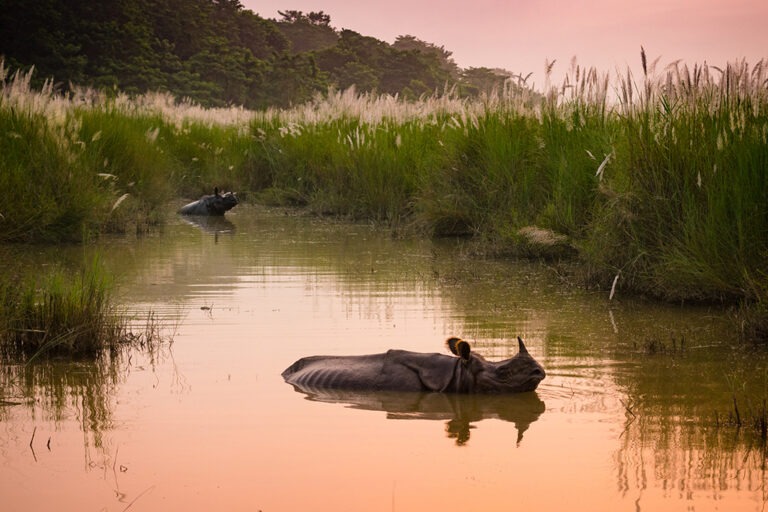
Few conservation stories in Asia match the recovery of this rhino. It was close to extinction in the twentieth century, and strict protection since then has brought a recovery in Chitwan and Bardia. Recent national counts have placed the total at several hundred animals, with most in Chitwan. It likes wet grassland and rivers, and is one of the easiest big animals to see on a Chitwan safari.

Asian elephant
Nepal’s wild elephants live in small groups in the western and eastern Terai, with Bardia and the surrounding forests being the best-known area. They need large ranges, and conflict with farmland is a growing problem. Watch from a safe distance, keep voices low and never approach a herd on foot.

Leopard
The leopard is a quiet, mostly night-time hunter that can live close to villages. It can climb with prey into a tree. Chitwan and Bardia both have leopards, but sightings need patience and luck, usually at dawn, dusk or on night drives where allowed.

Striped hyena
This shy scavenger lives in dry forest and open grassland. It is rare in Nepal and little studied, and is mostly active after dark. It is not a danger to visitors, and any sighting is a reward for a patient guide.

Pangolin
The pangolin is the only mammal with a scale-covered body. It eats ants and termites, and rolls into a ball when scared. It is heavily trafficked across Asia and is a protected species in Nepal. Sightings are very rare, and you should never buy any product made from pangolin scales.

Honey badger
The honey badger is small but famously tough, and it will take on much larger animals. It eats small animals, eggs, insects and honey. It is found in parts of the western lowlands and is seldom seen by tourists.

Otters
Nepal has several otter species, living in rivers, marshes and lakes. Bardia’s Babai river is a good place to watch for them, and they are also recorded elsewhere in the lowlands and near Pokhara. Early morning is your best chance.

Sloth bear
The sloth bear is a shaggy, mostly night-time bear that digs out termites and ants. It is vulnerable. It can be dangerous if surprised, so walk with a guide and keep your distance. It lives in dry forest and grassland in Chitwan and Bardia.

Bengal tiger
The Bengal tiger is the main prize of a Terai safari. Nepal’s recovery programme has been one of the most celebrated in the world, with the national count rising substantially in recent surveys. Chitwan, Bardia, Banke, Parsa and Shuklaphanta all hold tigers. Sightings still depend on luck, so give yourself at least three nights and do not be disappointed if you only see tracks.
Where to go and when
| Park or region | Best for | Best months |
|---|---|---|
| Chitwan National Park | Rhinos, tigers, gharials, birds; easiest to reach | October–November and February–April |
| Bardia National Park | Tigers, elephants, river dolphins; quieter | October–November and March–April |
| Annapurna, Langtang, Manaslu | Blue sheep, red pandas, Himalayan birds | October–November and March–May |
| Mustang, Manang, Dolpo | Snow leopard habitat; expert-led winter trips | Specialist trips only |
Heavy rain from June to September can close roads and trails, and some lodges shut. Read our best time to go guide before fixing dates, and check recent flood and road conditions with us.
Responsible wildlife viewing
- Always go with a licensed guide. Walking alone in a national park is not allowed in most areas.
- Keep a safe distance and never feed or chase animals.
- Wear muted colours, keep quiet and avoid strong scents.
- Say no to souvenirs made from animal parts.
- Choose lodges and operators that employ local people and support conservation.
Plan your wildlife trip
Wildlife works best as part of a wider trip. Many travellers combine two or three jungle nights with Kathmandu and Pokhara, and mountain animals with a trek. Look at our Kathmandu Tour and Chitwan National Park Safari or our Everest Base Camp trek, or tell us what you most want to see and we will suggest a route.
For a family or honeymoon plan that includes Chitwan, read our Nepal honeymoon and family trip guide, and for health and entry advice see our Nepal safety guide.

About the Author Shankar Bhatta